
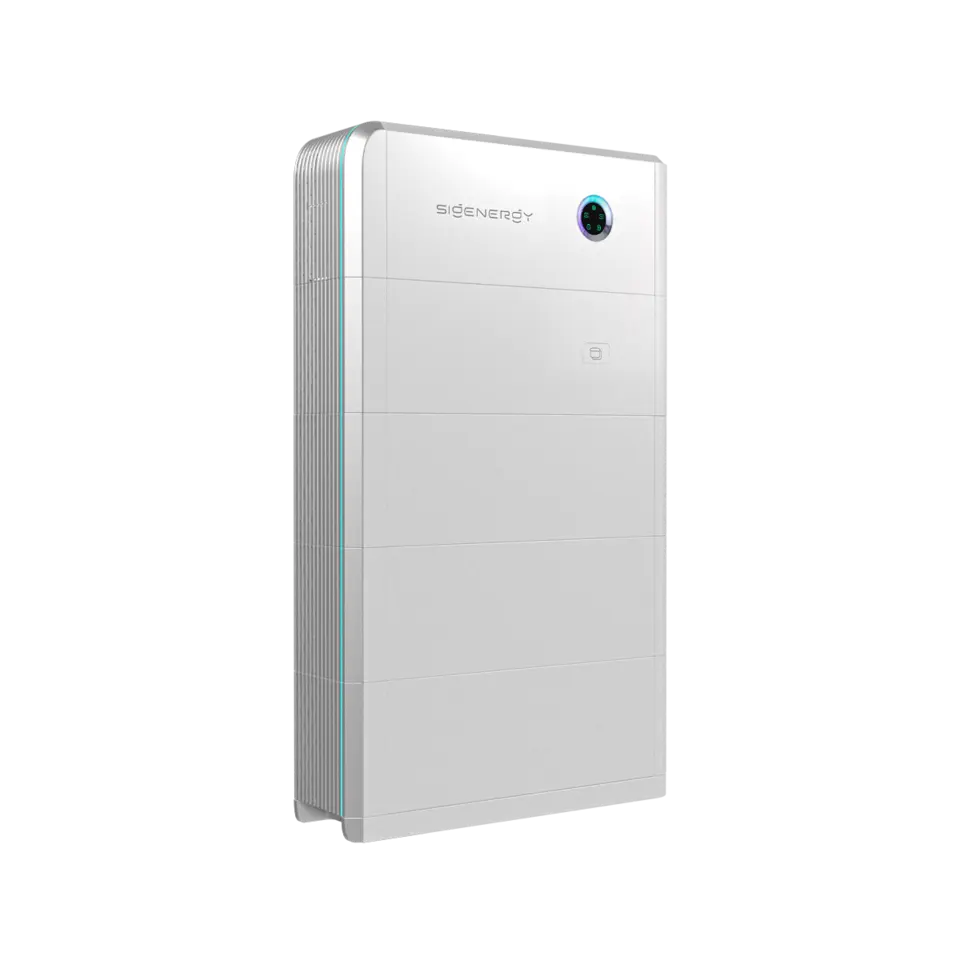
Sigenergy SigenStor home battery systems
SigenStor puts a solar inverter and stackable battery modules in one unit. Store spare solar during the day and use it after sunset. We’ll size the stack around your evening use and show you what blackout backup or EV charging would add.
What goes into a SigenStor system?
Energy Controller and battery packs. The controller manages power between the panels, battery, home and grid. The packs store energy. A useful quote names both: the controller model and phase, plus the model and number of packs.
Two optional extras. The Home Energy Gateway is part of a backup design. The EV DC charging module is for a compatible vehicle. Buying the battery stack does not by itself mean either feature is included.
BAT 6.0 and BAT 10.0: compare the numbers
The model number is not the energy you can use overnight. These are Sigenergy’s Australian figures for one module, not a whole system.
| Per module | BAT 6.0 | BAT 10.0 |
|---|---|---|
| Total energy | 6.02 kWh | 9.04 kWh |
| Max. charge or discharge power | 3.0 kW | 4.6 kW |
For example, two BAT 10.0 modules hold 18.08 kWh total. That is not a promise of 18.08 kWh at your appliances: usable capacity, backup reserve, losses and operating conditions matter. The controller can also limit the power delivered to the house. See the Australian specifications.
Size it for an ordinary night, not the biggest bill
Look at when you buy electricity. If you use 12 kWh between sunset and breakfast but export only 7 kWh during a typical winter day, a bigger battery cannot make up the missing solar generation. Summer, winter and any planned EV charging may give different answers.
We compare your evening imports with spare daytime solar and your tariff. A useful proposal shows what a smaller stack would cover, what the next module adds, and how often that extra capacity would actually be used.
Can you keep your existing solar inverter?
For a working solar system, compare a retrofit that keeps the current inverter with a design that connects the panels to a new Sigen Energy Controller. Send us the inverter make and model, panel capacity and whether the home has single- or three-phase power.
Grid-connected operation and blackout operation are different checks. A retained third-party inverter can stop producing in a blackout even when SigenStor supplies your selected circuits. We confirm the proposed arrangement against Sigenergy’s retrofit guidance before promising solar recharge during an outage.
Blackout backup: decide what needs to stay on
Start with a short list: fridge, internet, lights and any essential pump. Then list heavy loads such as ducted air conditioning, induction cooking or EV charging separately. Ask which circuits and phases the quoted gateway and controller will actually support.
A run-time example: if 6 kWh is available for backup and the loads average 0.5 kW, the arithmetic gives 12 hours before losses. A higher load shortens that time, and start-up power can rule out an appliance even when energy remains. This is a sizing example, not a guaranteed run time.
Keep your AC charger or add SigenStor EV DC?
If your car is parked overnight and already charges comfortably on AC, the DC module may add little to your routine. If the car comes home between trips and you need faster top-ups, compare a DC option with the cost of keeping the charger you already own.
Sigenergy lists 12.5 kW and 25 kW DC options with a CCS2 interface. Actual charging depends on the vehicle, site supply and system design. Bidirectional charging is a separate compatibility and approval question; it is not included as a benefit unless confirmed for your car and installation.
What should the installed price include?
Ask for three figures: the installed price before incentives, the value of any eligible federal battery discount, and the balance you pay. We separate the controller and modules from gateway hardware, backup circuits, switchboard work and EV charging, so two quotes can be compared on the same scope.
The federal Cheaper Home Batteries Program applies to eligible installations, not automatically to every SigenStor configuration. The exact model, usable capacity, installation date and any previous battery claim at the premises matter. See the Clean Energy Regulator’s eligibility rules or our rebates guide.
Warranty, handover and support
Keep the itemised invoice, model and serial numbers, commissioning record and the warranty schedule supplied for your hardware. Battery product cover, battery performance cover and accessories can have different conditions. The Australian and New Zealand limited warranty lists covered models; ask for the version that applies to your proposed system.
At handover, confirm which circuits are backed up, how to read the mySigen app and who handles a service request. For an existing SolarPlus installation, use Warranty & Support rather than starting a new quote.
Existing owners: check the Australian controller recall
A November 2025 recall covers certain single-phase 8, 10 and 12 kW controllers with a particular quick-connect AC plug, sold from 4 March to 18 November 2025. The affected plug can overheat. This notice concerns specified controllers, not every SigenStor battery. Check Sigenergy’s owner notice for your unit. Affected owners should keep the system internet-connected for the manufacturer’s update and arrange a free replacement through their retailer or Sigenergy service partner.
SigenStor questions from homeowners
Get a SigenStor design for your home. Start the free savings check and select the type of system you want. We’ll review your site and explain the hardware, installation cost and any eligible discount.
Compare home battery brands · Melbourne installations · Sydney installations · Call 1300 899 990